Water damage repair Peoria IL and Bellevue WA homeowners search for often means two different things depending on who you ask and that confusion leads to real problems when homeowners think one stage of the process is the whole job.
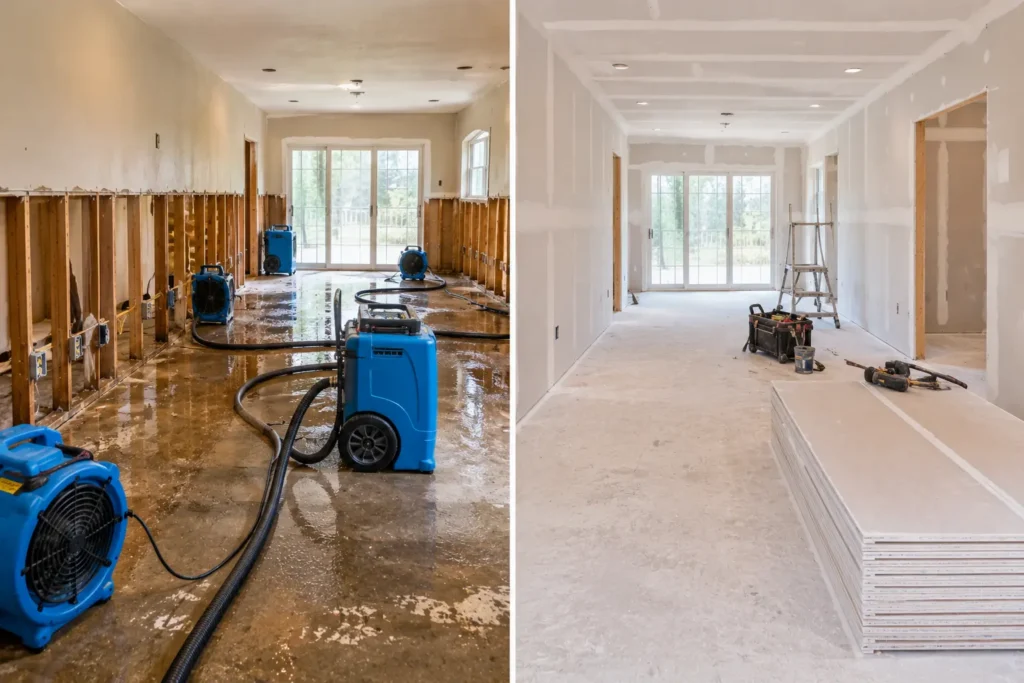
Repair and restoration are not the same thing. They are two distinct phases of what happens after water enters a home, and understanding the difference is what helps you ask the right questions, make informed decisions, and avoid the most common and costly mistake in water damage recovery – stopping the process too early.
What Water Damage Repair Actually Means
Water damage repair Peoria IL and Bellevue WA jobs both start the same way – the emergency response phase that begins the moment water is discovered. It covers everything that stops the damage from spreading and addresses the immediate threat to the structure.
Repair in the water damage context includes:
- Water extraction — removing standing water using truck-mounted or portable extraction equipment. This is the starting point of every water damage job regardless of scale.
- Structural stabilization — addressing any immediate structural risk created by the water event, including compromised load-bearing walls, saturated ceiling assemblies that risk collapse, or flooring that has buckled and become a safety hazard.
- Emergency tarping and boarding — stopping active water entry from a damaged roof or broken window before interior drying can begin.
- Content protection — moving and protecting belongings, furniture, and equipment from ongoing damage before the full drying phase starts.
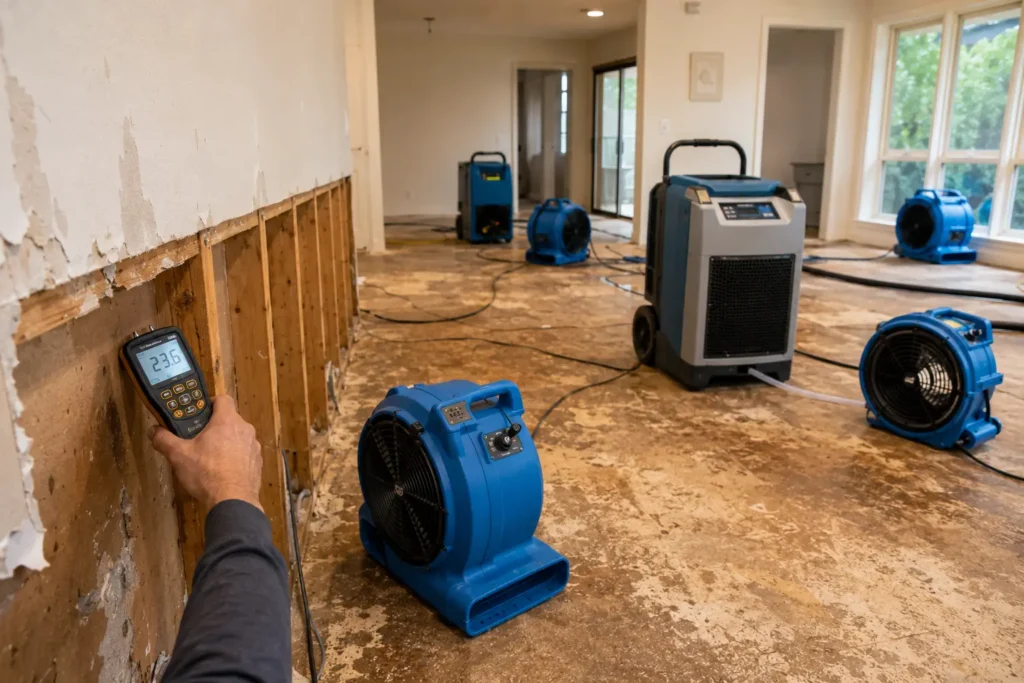
- Initial moisture mapping — identifying every wet zone using thermal imaging and moisture meters before any equipment is placed.
This phase is about stabilization and damage limitation. It’s urgent, it requires professional equipment, and it needs to start as fast as possible after a water event, because every hour water sits, it spreads further and the repair scope expands.
What Water Damage Restoration Actually Means
Restoration is the second phase, everything that happens after the immediate damage has been stabilized and the structure has been professionally dried. It’s the process of returning the property to its pre-loss condition.
Restoration includes:
- Structural drying — the multi-day process of running commercial dehumidifiers and air movers until all structural materials reach acceptable moisture levels, verified by daily moisture readings. Our structural drying service follows IICRC drying protocols on every job, with documented readings that confirm the structure is genuinely dry before reconstruction begins.
- Material removal — removing any materials that couldn’t be dried in place, including saturated drywall, wet insulation, buckled flooring, and contaminated carpet.
- Mold prevention and remediation — applying antimicrobial treatments to all affected surfaces after material removal, and addressing any mold growth that established during the water event. According to the EPA guidelines on indoor moisture and mold, materials that remained wet for more than 24 to 48 hours should be evaluated for mold before any reconstruction begins.
- Reconstruction — replacing removed materials, repainting, reinstalling flooring, and restoring the space to its original condition.
- Final inspection and documentation — confirming all moisture readings have returned to normal levels and the space is safe for occupancy.
Restoration is a longer process than repair. Most residential jobs run two to four weeks from extraction through completed reconstruction, depending on the scale of damage and how quickly the response started.
Why Homeowners Confuse the Two – and Why It Matters
The confusion between repair and restoration happens because both terms get used loosely in the industry, and because the line between them isn’t always obvious when you’re in the middle of a water damage event.
The most common and costly version of this confusion is stopping after the repair phase and assuming the job is done. The extraction is complete. The floor looks dry. The fans have been running for a day. Everything seems fine.
What’s actually happening in many of these cases is that moisture has migrated into wall cavities, subfloor assemblies, and structural framing, materials that look and feel dry on the surface while still holding moisture readings well above the safe threshold. When reconstruction starts over those materials, or when no further action is taken, that hidden moisture creates the conditions for mold growth and structural degradation that shows up weeks or months later.
This is the mistake our emergency water removal team regularly encounters when called to properties where a previous “repair” was done but the restoration phase never happened, wet framing behind new drywall, mold colonies under new flooring, structural rot that started from moisture that was never properly dried.
Regional Differences – How Bellevue WA and Peoria IL Jobs Compare
The repair versus restoration distinction plays out differently depending on where the property is located, because regional climate affects every phase of both stages.
In Bellevue WA, the Pacific Northwest climate creates a specific challenge during the restoration phase – high ambient outdoor humidity slows the structural drying process significantly. Commercial dehumidifiers work against outdoor air that often carries 70 to 80 percent relative humidity during the wet season. Drying cycles that might take three days in a dry climate can take five to seven days in Bellevue, and equipment placement needs to account for that extended timeline.
In Peoria IL, the seasonal dynamics are different. Spring flooding from the Illinois River drives most of the major water damage events, and the combination of high groundwater pressure and older block-foundation homes creates a repair phase that often involves more water volume and wider spread than a typical pipe burst. Homeowners dealing with water damage repair Peoria IL situations after Illinois River flooding events frequently find that the basement flooding and roof storm damage happened simultaneously, two separate repair scopes running at the same time before restoration can begin on either.
Both regions share one consistent factor, the restoration phase takes longer when the repair phase was delayed or incomplete.
Basement Flooding – Where Repair and Restoration Overlap Most
Basement flooding is the situation where the line between repair and restoration gets most blurred for homeowners, because the basement is often a lower-priority space and the damage isn’t always immediately visible to the rest of the household.
In Bellevue, basement flooding typically comes from groundwater during heavy atmospheric river events. In Peoria, it comes from Illinois River stage rises pushing water through block foundations. In both cases, the repair phase – extraction – can happen relatively quickly. The restoration phase is where the complexity lives.
Our basement flooding repair process addresses the specific challenges of below-grade drying, concrete and block materials that hold moisture longer than above-grade framing, drainage issues that need to be addressed before reconstruction begins, and the higher mold risk that comes with basements where air circulation is naturally limited.
Starting reconstruction in a basement before structural drying is fully confirmed is one of the most consistent causes of mold callbacks we see and it’s entirely preventable with proper moisture documentation before any new materials go in.
Mold Risk – The Bridge Between Repair and Restoration
Mold is the consequence that connects incomplete repair to failed restoration. When the repair phase doesn’t extract moisture thoroughly enough, or when the restoration phase starts reconstruction before drying is confirmed, mold establishes itself in the gap.
The timeline is consistent regardless of region, mold spore germination begins within 24 to 48 hours of moisture exposure on organic materials. By the time reconstruction starts over materials that weren’t fully dried, mold colonies may already be forming inside wall assemblies that look completely clean on the surface.
Our mold remediation service handles the situations that result from incomplete repair and premature restoration and it’s a more involved and more expensive job than the mold prevention steps that should have been part of the original restoration process.
The practical takeaway is this: the repair phase and the restoration phase need to be treated as a connected sequence, not two separate jobs. Completing one without the other creates the conditions for exactly the problems that both were supposed to prevent.
Final Thought – Both Stages Matter Equally
Water damage repair gets the attention because it’s urgent and visible. Restoration gets rushed or skipped because it’s slower and less dramatic. The result of that imbalance is the most common pattern in water damage callbacks – mold, structural issues, and failed materials that trace back to a restoration phase that didn’t happen correctly.
For homeowners in Bellevue WA and those managing water damage repair Peoria IL situations after Illinois River flooding season, the standard is the same – professional extraction, documented drying, confirmed moisture clearance, then reconstruction.
Call (425) 439-7416) – our Bellevue team is available 24/7 for both emergency repair response and the full restoration process that follows.
Leave a Reply